Animals of Ukraine

What happens to animals when a country goes to war?

04.10.2026

by Raluca Cristea, Translation: Michael Bird

“Animals of Ukraine” is also available in Romanian and Ukrainian.

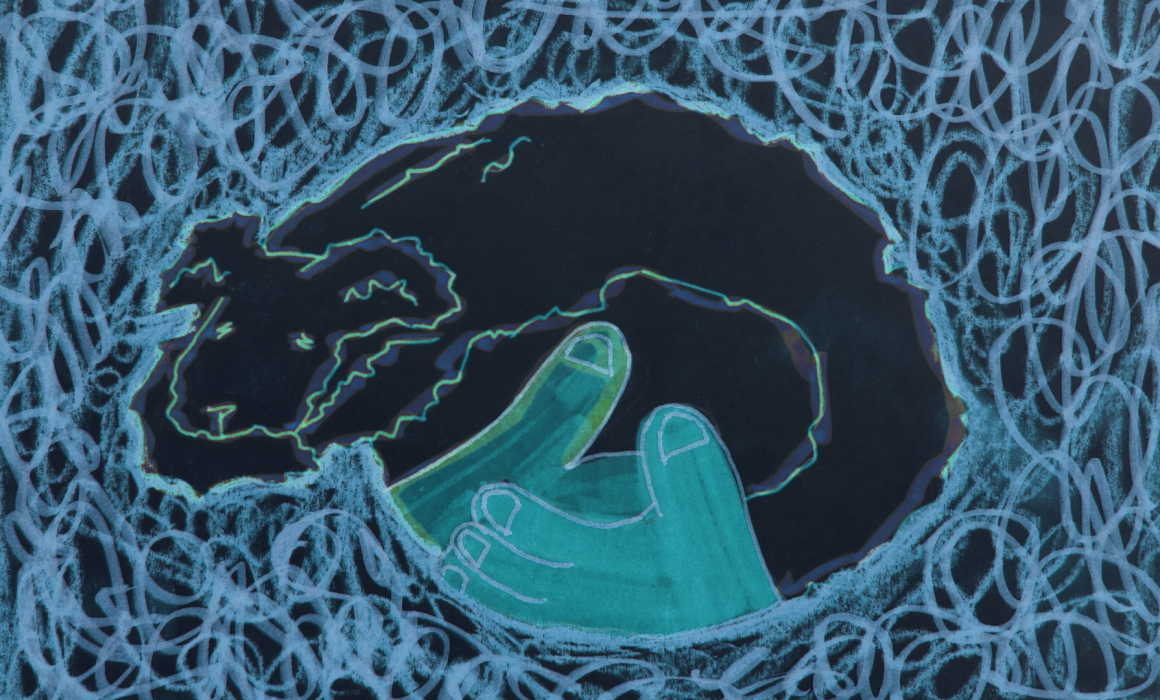
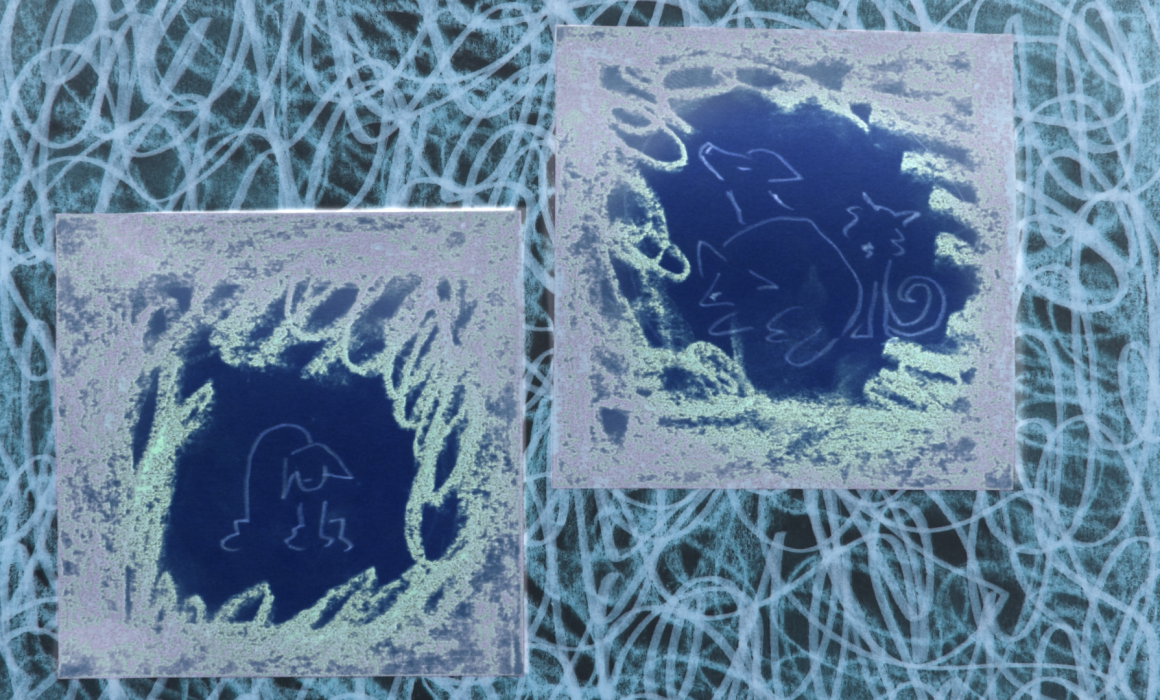
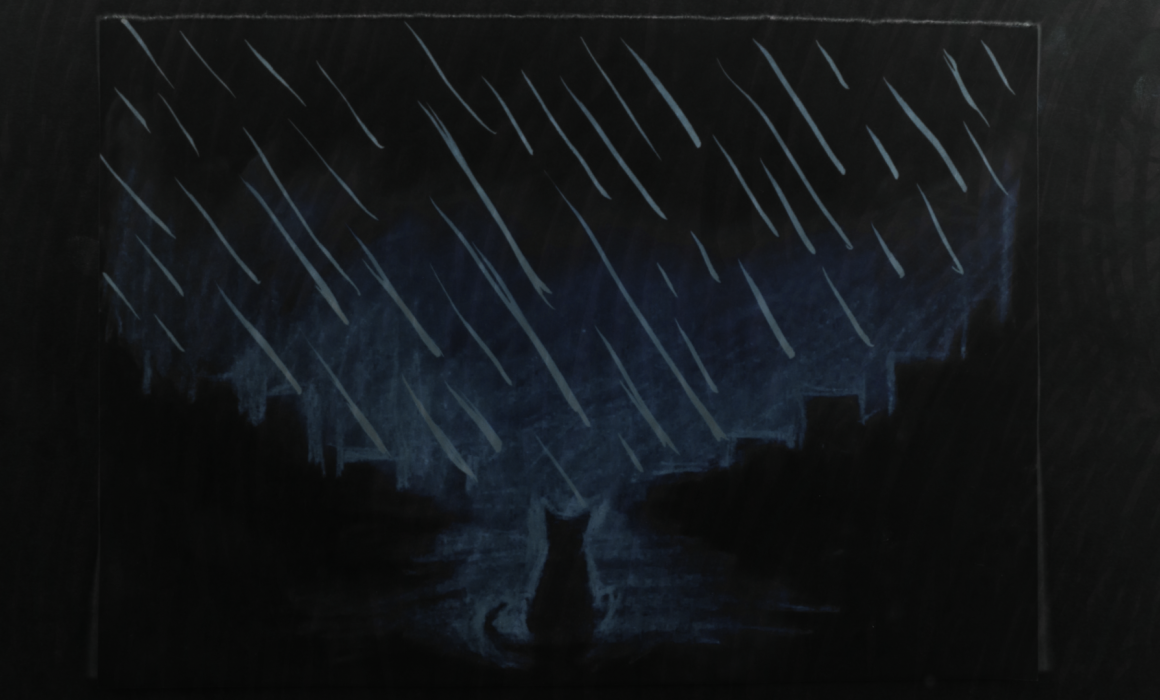
  • The video excerpt is taken from the animated film “On the Road”, produced by ten teenagers as part of the Summer School organized by The Animation Incubator: Ana Gheorghiu, Andra Iancu (Nak), Chris R. (cr1zak), Diana Vasile, Elitsa P (Kerana), Kali, Martin Nikolov (Starxdraws), Mia “Renai” Pendeva, Soko, and Sophia Anova. You can read a feature story by Școala9 about the creative process the teenagers went through to transform this feature into an animated film that will be distributed internationally. The first screening takes place today, October 4, at Fresh Frames, part of the Animest Festival (4:30 p.m., Cinema Muzeul Țăranului Român).

A Romanian NGO that raced to a conflict zone to save pets, a journalist who passed through multiple borders to adopt a cat, and a reporter who shares his Kyiv apartment with rescue animals offer three experiences of the same reality: war does not affect only people. What happens to animals who survive bombings, food shortages, and the chaos of war?

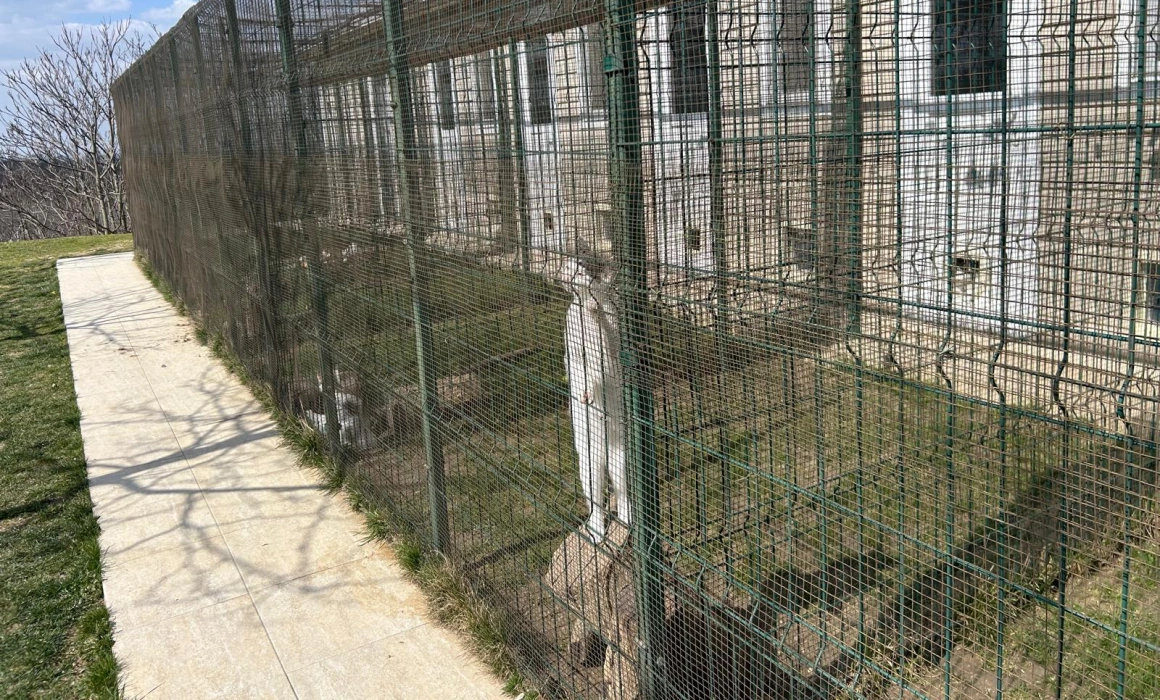
Kendra and Bimka are two dogs whose idea of “home” was Odesa, until the outbreak of Russia’s full-scale war against Ukraine. They now share a kennel at a shelter in Cernavodă, Romania. The white fur around their muzzles and eyes shows their age.

1/3
1/3
2/3
2/3
3/3
3/3

Photo: Kendra and Bimka at the “Urme de Bucurie” animal shelter in Cernavodă.

Chiara Rigamonti, an Italian volunteer with animal welfare organization Save the Dogs, introduced them to me. The dog area is enclosed by metal fencing, with concrete borders and a gravel walking area. Barking echoes down the long pathways between the kennels.

1/2
1/2
2/2
2/2

Photo: Chiara Rigamonti, a volunteer from Italy; the shelter’s pathways.

Neither dog is currently adoptable because, despite all the hard work by the shelter staff, “they do not want to interact with people,” says Kiara. They arrived in Cernavodă from the Loving Hearts Shelter in Odesa, which looked after 180 dogs. Their premises were damaged in a Russian attack at the beginning of the conflict, and the shelter needed help to rehome some of their animals. They asked Save the Dogs to take in 30 of them. The organization agreed.

“The biggest challenge was behavioral,” says Sara Turetta, the founder and president of Save the Dogs. “These animals were coming not only from a war zone but also from shelters that lacked professional training in handling traumatized animals.”

Photo: Sara Turetta │ Save The Dogs.

It was the largest rescue operation Save the Dogs had ever carried out. The 30 dogs traveled to the border in a rented truck, crossed customs, and arrived at the shelter after midnight in four vans. Once in their new home, vets gave them medical and behavioral assessments, vaccinations, and disease testing. Most of the dogs eventually found homes in Sweden.

The organization chose to accept only 30 dogs so that it could focus its resources on prevention efforts in Ukraine, particularly spay-and-neuter programs.

“This is the most valuable thing we can do, because 5,300 sterilizations mean hundreds of thousands of puppies who will never be born,” Sara explains.

The NGO’s founder first came to Romania in August 2001 and says that after her initial visit she could not return to her previous life.

She witnessed what she describes as “the dramatic situation” of Romania’s stray dogs. At that time, hundreds of thousands of abandoned and stray animals were living in Romania’s urban and rural areas.

“It became an obsession to do something for the animals in this country,” she recalls. 

In 2002, she founded the shelter.

“That decision was 100 percent emotional. It was crazy and could have been a failure. But it wasn’t.”

Beginnings

In February 2022, as Russia launched its full-scale invasion of Ukraine and tens of thousands of Ukrainians fled their homes, Save the Dogs took  its first steps to support abandoned and starving animals.

At the time of writing, the war has so far left 56,000 civilians dead, displaced 3.7 million people within Ukraine, and forced another 5.9 million to seek refuge abroad.

Alongside human casualties, animals have also suffered immensely in the Russo-Ukrainian conflict.

More than six million farm animals have died in Ukraine since the start of the invasion, while over 80 wild species risk disappearing entirely as their habitats are destroyed.

Many pets have travelled thousands of kilometers away from the war in adoptions run by shelters.

Others have adapted their behaviour to the harsh wartime conditions. According to a study, dogs living near the frontline have begun displaying characteristics more commonly associated with wild canines, such as wolves and coyotes.

When the full-scale war began, Save the Dogs’ newly appointed Country Director, Gregg Tully, had only just joined the organization. On his first day, the team decided that helping animals affected by the conflict would become a priority.

The Cernavodă shelter lies just two and a half hours by car from the Isaccea border crossing between Ukraine and Romania. A team of 42 volunteers was present every day between March 3 and June 30, 2022.

Photo: Still from the animated film “On the Road”, produced by ten teenagers as part of the Summer School organized by The Animation Incubator.

In the Cernavodă city center on a warm March morning, near a small food market square scented with bananas and fresh bread, I meet Adriana Susmă, General Director of “Urme de Bucurie” (“Traces of Joy”), Save the Dogs’ main project.

With her short hair, glasses, and plaid shirt, Adriana climbed into the organization’s van, and we head toward the shelter, about five kilometers away.

Just a few minutes before arriving, the van slows down.

To our right, in a large meadow, five horses and a pony graze. They had been close to death when rescued from an abusive owner in Ilfov County and brought here to recover. Later, they will find a new home.

This is only a small glimpse of the organization’s activities.

“Empowering them as they are”

The veterinary clinic is a single-story building, built in 2017 according to international standards of animal care. It has five wings, an operating room, a pre-operative room, two treatment rooms, a pharmacy, an X-ray room, offices, and a reception area.

Some wings open onto small outdoor yards, while others serve as quarantine areas for newly arrived animals.

Photo: A cat in an outdoor section of the shelter.

“No matter how nice it is here and how high our standards are, it’s still a shelter,” says Adriana.

Photo: Adriana Susmă │ Save The Dogs.

For some animals who arrive here, this will be their final home. That is why the entire team tries to view each arrival “as a whole,” focusing not only on their physical well-being but also on their behavioral needs.

“Empowering them as they are” is the shelter’s guiding philosophy.

Animals come here after being abandoned, from alerts by concerned citizens, or referrals from Romania’s Animal Police. In total, the shelter’s 36 employees care for around 300 animals: 50 donkeys, 25 horses and one pony, while the rest are dogs and cats.

1/2
1/2
2/2
2/2

Photo: A donkey and a horse at “Urme de Bucurie”.

Helping over 1,000 pets of refugees

In the first days of the full-scale war, Sara Turetta recalls information pouring in from all directions, but also a lack of clarity over whether their organisation's presence at the border was needed.

“On 3 March 2022, we said: let’s go to Isaccea, see what’s happening, and decide whether it makes sense to set up a help-point there,” Sara says today.

Although relatively few people were crossing the border with pets, there was still what she describes as “a significant number,” so on 6 March, they set up their help-point on the Romanian side of the border.

At first, this consisted of nothing more than a small table outdoors, sometimes in temperatures as low as minus ten degrees Celsius.

“It was incredibly cold,” Sara remembers. “Only after a few weeks did they give us a transparent plastic tent.”

The temperatures were not the only thing that brought a chill. Many of the people working there were skeptical of the organization’s efforts.

The emergency services staff viewed them with suspicion.

“They thought: Who are these people? Why are they here? They don’t belong here. Have they come to put on a show, and to create content for social media?” says Sara.

Once everyone saw how the organization was helping the pets that refugees brought across the border this skepticism turned into appreciation.

Eventually, every official delegation visiting the border was brought by the head of the Tulcea Emergency Inspectorate to the Save the Dogs tent.

“All the official delegations—from the European Commission, the embassies, the Princess Margareta foundation—he brought them to us and said: ‘Tthis is an organization that has done wonderful work. At first I thought it made no sense for them to be here. I was wrong. They have been extremely valuable.’ For me, it was a revelation to see a representative of the authorities capable of saying: ‘I was wrong’.”

According to the organization’s activity report, more than 1,000 pets belonging to Ukrainian refugees received support at the crossing point in 2022.

In addition, Save the Dogs donated over 650 tons of animal food, as well as hundreds of crates, kennels, and antiparasitic collars.

Photo: Still from the animated film “On the Road”, produced by ten teenagers as part of the Summer School organized by The Animation Incubator.

At the border, Sara also noticed Adriana Susmă leading a volunteer team. Convinced that she would be a valuable addition to the organization, Sara offered her a job.

In 2022, Save the Dogs spent nearly 40 percent of its total annual budget on animals in Ukraine—more than €730,000.

In 2023, the organization focused on providing food and sterilization services in conflict-affected areas.

More than 600 tons of food were distributed, and in the cities of Odesa, Mykolaiv, and Izmail, and over 3,400 sterilizations were performed through partnerships with five veterinary clinics.

That same year, spending on Ukraine exceeded €780,000.

In the autumn of 2024, due to a decline in international funding, the Ukraine project was officially closed.

Over two and a half years of intervention, the organization received donations primarily from the United States, as well as from European organizations and individual donors.

Most funding still comes from Italy, but Sara says she hopes that, in the coming years, Romanians themselves will support the shelter more actively.

“Because this shelter benefits communities in Romania, not in Italy.”

Crisis relief advice: know your limits

When war reaches your doorstep, you are forced to confront your own limitations.

Looking back, Sara says she learned that every effort to help must remain relative to one’s actual capacity.

“Otherwise, the risk is that you destroy everything you’ve built because of an emotional impulse,” she adds.

The biggest challenge is accepting your limits. You want to do more. You want to help more. But you can’t. Nothing was more difficult for me to process than the idea of a war right next door. And in moments like that, emotions can rob you of clarity. That’s very dangerous.

More than four years after the start of the conflict, she still remembers the cars arriving at the border with the word “CHILDREN” written in large, visible letters across them, viewable from the air—a desperate attempt to avoid being targeted.

She also remembers a mother and daughter arriving from Kherson after a bombardment. They had two small dogs with them. The older woman was lying across the back seat because she had suffered a fracture. Her daughter had driven hundreds of kilometers to reach the border.

“We took them to the hospital in Tulcea, where the older woman was admitted, and we looked after the dogs until they had resolved their situation. They couldn’t bring the animals into the hospital. These things may seem small, but in moments like that you can ease a dramatic situation that people are going through.”

Video: excerpt from the animated film “On the Road”, produced by ten teenagers as part of the Summer School organized by The Animation Incubator.

Xiușa: one of ten refugee cats

Oksana Priseajniuc, a woman in her fifties living in Odesa could be described as “a lifelong cat person.”

At the beginning of the war, Oksana was caring for around 30 animals. All of them had once belonged to elderly residents living on Ilf and Petrov Street on the outskirts of Odesa. The costs of their upkeep in such a crisis were growing, and Oksana had to let some of the cats go.  So she partnered with the animal rescue Riga & Berlin Association to transport ten cats to Romania.

We know this because Xiușa, one of those ten cats, ended up with Ioana Pelehatăi, journalist and managing editor at Scena9, who tried to piece together her life before adoption.

1/3
1/3
2/3
2/3
3/3
3/3

Photo: Xiușa, from Ioana Pelehatăi’s archive.

“When I started learning things about her, I felt like I was doing forensic work. I was trying to reconstruct the life of someone from scattered bits of information.”

When Ioana adopted her, Xiușa was 12 years old, fluffy, white, and had no teeth.

“She was incredibly gentle, balanced, and intelligent,” Ioana recalls, calling her “the cat of my life.”

This was a strong cat, who survived surgery for axillary fibrosarcoma, heart problems and diabetes.

But in March last year, Xiușa developed a second cancer that could no longer be operated on. That month, she died at the age of 14 years and seven months.

Snijka: worth crossing six borders to bring home

In December of last year, Oksana sent Ioana a photo of a cat that looked “almost identical to Xiușa.”

She asked if she wanted her.

However this time  there was no longer any organization to transport the animal to Romania. So Ioana decided to travel to Ukraine and bring the cat back herself.

Petru Gabor, who runs the NGO Voluntar Fără Frontiere (‘Volunteer Without Borders’) and makes trips into Ukraine almost every week, “was the only person willing” to accompany her.

The journey to fetch the cat—whom she would later name Snijka—lasted nearly twenty hours and Ioana needed to  cross international borders six times to complete the task.

They left Bucharest at six in the morning in February of this year, crossed into Ukraine via the ferry to Orlivka, drove another fifty minutes, and arrived in Izmail, where they picked up the cat.

They boarded the ferry again, but on the Romanian side of the border the guards informed them they could not enter the country with the animal through that crossing point because there was no vet on duty.

Five hours of negotiations followed, without success.

They needed another solution.

They crossed back into Ukraine through the Orlivka checkpoint, through an area targeted by Russian drones.

“We had a protocol for what to do if drones attacked, because you only have a few dozen seconds to get out of the car and run,” says Ioana “Fortunately, it never came to that.”

They eventually brought the cat through the Republic of Moldova.

By then, it was night-time and the temperature had dropped to minus twelve degrees Celsius.

They reached Bucharest at two in the morning.

Once home, the cat stepped out of her carrier, took a few steps, opened its jaws and bit Ioana.

“That pretty much sums up our relationship ever since,” she laughs.

They named her Snijka meaning“snowball.”

She is between seven and nine years old and is “far more energetic than you would expect from a middle-aged cat” says her new owner.

1/2
1/2
2/2
2/2

Photo: Snijka, from Ioana Pelehatăi’s archive.

Ukraine’s status as a non-EU country made the process especially complicated, Ioana explains.

“I can’t look at images of animals in war zones—not from Gaza, not from Sudan, not from Iran, not from Ukraine. I simply can’t,” she says. “It creates a constant, sinister feeling of despair.”

But she insists that it is not about her own sadness.

“It’s about the injustice of wars and genocides against both humans and animals.”

The sound of war is the sound of a Shahed drone

Alex Craiu is a journalist who has spent nearly three years reporting from Kyiv.

Sometimes under the threat of drones overhead, he reports for Veridica, Kanal D, Euronews, Digi24, and appears weekly on TVR Info’s program Frontul (“The Front”).

He also documents life in Ukraine on his Instagram account, @nuvreiaici (“You Don’t Want to Be Here”). The last time he was in Romania was in February.

Alongside his journalism, whether reporting from the field or moving through the dangerous streets of Ukraine’s cities, Alex rescues animals whenever he can.

We conduct our interview the day after a major Russian attack on the capital in June.  The previous night, six people were killed in Kyiv alone.

Before the war, he says, he had “a fascination with the former Soviet space,”  particularly with the political mechanisms that had shaped what he describes as “a fascinating history.”

He first travelled to Ukraine in September 2022 and one year later he decided to move there permanently.

Since then, he has visited every region of the country, checking off the last one—Kherson—in April this year.

“I can’t wait to leave Ukraine,” Alex tells me at the beginning of our Google Meet conversation. Then he immediately adds that this chapter of his life will continue “until something becomes clear regarding the war—and perhaps until it finally ends.”

1/3
1/3
2/3
2/3
3/3
3/3

Photo: Alex Craiu reporting from Ukraine.

For him, the typical noise of war is unmistakable. It’s the “unmistakable sound” of a Shahed drone, inexpensive Iranian-designed unmanned aerial vehicles widely used by Russia in the war.

“It’s strange when you realize that the explosions you see in the distance mark the exact moment when people are dying,” Alex says. “If I can’t save people, then at least I can save animals.”

Photo: Still from the animated film “On the Road”, produced by ten teenagers as part of the Summer School organized by The Animation Incubator.

Animals “belong to extremely vulnerable category”

Alex says he has deliberately made helping animals part of his daily mission.

One reason is what psychologists call the bystander effect—the tendency for people to assume that someone else will help.

The other is that animals do not know how to protect themselves from war.

“If they’re covered by a piece of cardboard, they feel safe,” he says. “Against a missile or a drone, that means absolutely nothing. That’s why they belong to an extremely vulnerable category.”

In Ukraine, farm animals are often “abandoned out of necessity,” Alex explains.

“When evacuations happen, physically you simply cannot take every animal with you.”

Based on his observations, he identifies three categories of places depending on their distance from the front line:

  • More than 50 kilometers from the front: Life is relatively similar to the rest of Europe. You still see animals on the streets, though they sometimes become victims of bombardments.
  • Between 10 and 50 kilometers from the front: This is what Ukrainians call the near-front-line territory. “There are frightened animals, animals running free, animals wandering through the streets searching for resources that are becoming increasingly scarce.”
  • Fewer than 10 kilometers from the front: “Animals are left to fend for themselves. Survival becomes the only issue. They step on anti-personnel mines. They die from disease. They die because there are no resources. Or they die in bombardments.”

Photo: Still from the animated film “On the Road”, produced by ten teenagers as part of the Summer School organized by The Animation Incubator.

Pavlo, Avdiivka, Kutuzivka, and Dobby

Whenever Alex encounters an animal, he either tries to rescue it if necessary or at least feed it.

“At the moment, I have four cats,” he says.

1/2
1/2
2/2
2/2

Photo: Alex with one of the cats he adopted, from his personal archive.

Two—Avdiivka and Kutuzivka—were named after the places they came from. Another, Pavlo, was rescued in Kyiv. “I couldn’t exactly name him Kyiv,” says the journalist.

Kutuzivka is a village in the Kharkiv region in eastern Ukraine.

The village came under Russian attack in April 2022 and continues to be targeted by drones today.

The cat named after the village “has a chest injury. Someone hit her, and she also has a broken rib. She suffered from multiple illnesses as well, but she’s stabilized now.”

When Alex found her in the drone-struck village, she was pregnant.

Later, her kitten died. “She became very depressed,” he says.

To help her recover, Alex searched for an orphaned kitten she could adopt.

That is how Dobby entered his life—a hairless Sphynx kitten who reminded him of the house-elf from the Harry Potter books.

Avdiivka’s story is different.

She was not rescued directly by Alex but by Ukrainian soldiers.

“When Ukrainian forces had to retreat quickly from [the city of] Avdiivka because they were being overwhelmed by Russian troops, they took this tiny kitten with them.”

The cat later ended up in a shelter, from which Alex adopted her.

Vet clinics: staying open despite war

When it comes to veterinary costs, Alex has noticed that consultations and procedures are “about 25 percent cheaper than in Romania.”

In major cities, veterinary clinics have remained open despite the war.

The main difference is that, because of nighttime movement restrictions, they now operate only during the day.

Shelters across Ukraine have also developed programs designed to facilitate international adoptions.

According to Alex, many animals find homes abroad through partnerships with organizations and adopters in other countries.

The costs involved can be significant.

“Depending on the destination, it can cost €400, €500, even €600,” he says.

About half of that amount goes toward the paperwork required to legally take an animal out of the country, while the other half covers transportation.

War: Normalised for pets

Now, when missiles explode and the vibrations shake the apartment building where Alex lives in Kyiv, the cats remain surprisingly calm.

“They sit by the window, watching what’s going on. They don’t hide. They don’t panic. When there are bombardments, animals react with curiosity.”

Alex believes their behavior reflects what has become normal for their generation.

He explains their adaptation by noting that Ukraine is now likely witnessing the fourth generation of animals born during the war.

He feels that all four cats living with him in his temporary home in Kyiv show a certain gratitude for having been rescued.

“And that’s one of the things that brings me joy,” he says, “along with the fact that my apartment feels a little less empty.”

Raluca Cristea

reporteră

Când eram mică, spuneam foarte sigură pe mine că vreau să fiu judecătoare. Așa credeam eu că pot să fac dreptate în lumea asta mare. Între timp am descoperit că dreptatea e mai complicată de atât și că, înainte de orice dreptate, cineva trebuie să pună întrebări. Așa am ajuns jurnalistă. Când nu documentez sau scriu, cel mai mult îmi place să plec la drum lung, să stau cu pisica mea, să fac sport și să gătesc.

Michael Bird


Michael Bird este jurnalist și scriitor stabilit în România, ale cărui materiale au fost publicate în The Independent on Sunday, Vice, Mediapart, taz, Tagesspiegel, EU Observer, Scena9, Libertatea, Casa Jurnalistului, Matca, DoR și Business Insider. De asemenea, a colaborat cu BBC Radio și Deutsche Welle.

CUVINTE-CHEIE

animals ukraine war shelter